What Tools Do You Need for a Microcement Project? A Complete Guide
Every microcement project, whether it's a DIY renovation, a trade job, or a full build, needs three things: a mixer to get the material to a consistent, workable mix, a trowel suited to the surface being covered, and masking tape to protect the edges. Beyond that, the tools split by application. Floors, walls, and decorative texture finishes each use a slightly different toolkit, because the technique for each is different.
The Tools Every Microcement Project Needs
Three tools show up in every Ecoflor tool collection, because every microcement application needs them.
The iQuip 1050W Power Mixer is a variable-speed mixing drill built for microcement, plaster, and grout. Hand-mixing microcement to a consistent, lump-free finish isn't realistic on a job of any size, so this is the one tool that isn't optional, for DIYers or trades. The Purple Low Adhesive Masking Tape (50mm x 50m) protects skirting, cabinetry, and adjoining surfaces without pulling paint or previous finishes when it's removed. The 7-Piece Putty Knife Kit covers surface prep and detail work: patching, scraping, and working material into corners a trowel can't reach.


Floor Application Tools
Floors are typically finished with walking trowels rather than hand trowels, since larger continuous areas are covered while moving across the surface rather than working from a fixed position. The 55cm Magic Trowel is a squeegee-style walking trowel built for base coat applications across open floor areas, while the 35cm Magic Trowel handles more detailed or tighter floor sections where the larger tool won't fit. The Rubber Finishing Trowel is used for the fine, final microcement layer. It's soft enough to smooth the top coat without dragging or marking it.


Wall Application Tools
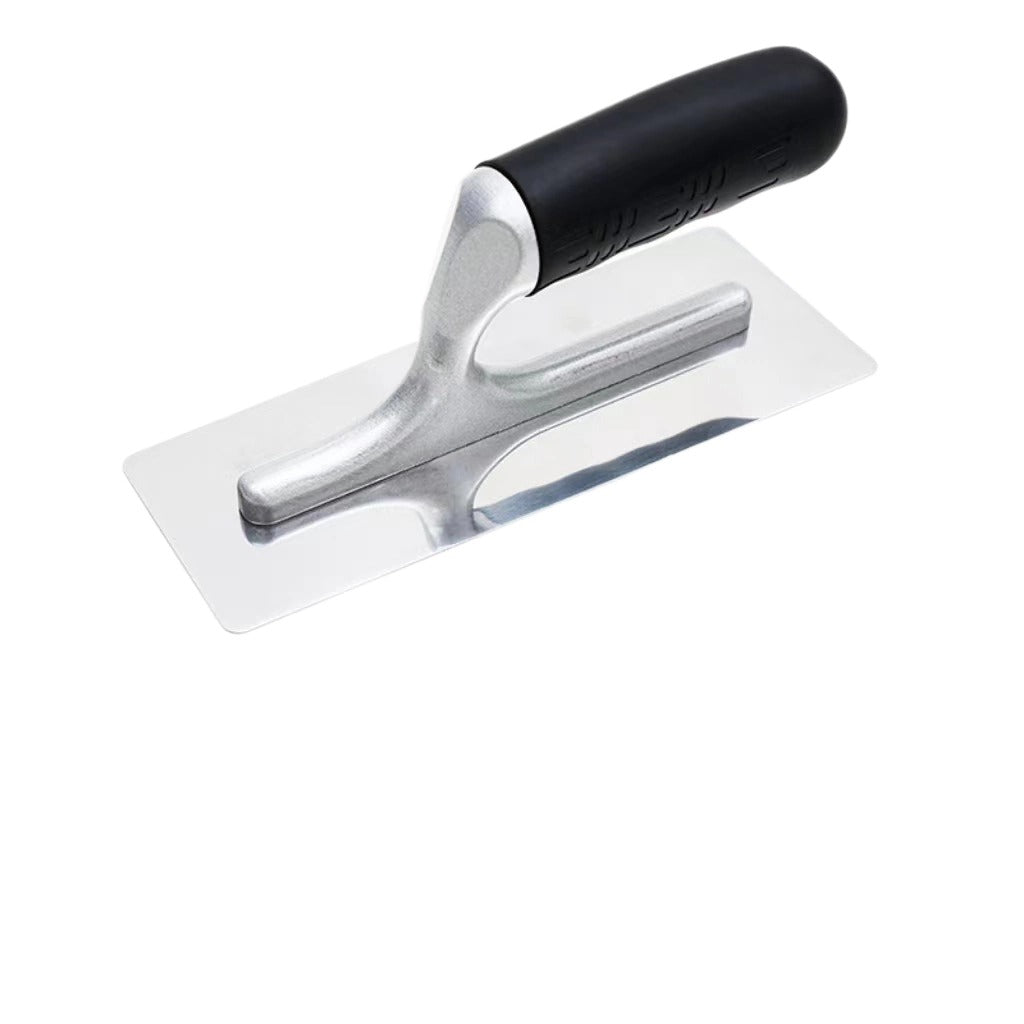
Walls are finished by hand with stainless steel burnishing trowels rather than walking tools, since vertical surfaces need more control over pressure and angle than a walking trowel allows. Ecoflor's wall trowels come in three sizes (200 x 80mm, 234 x 110mm, and 240 x 100mm), so the trowel can be matched to the wall section and level of detail being worked. The Internal & External Corner Trowel Set handles the corners a flat trowel can't reach cleanly, which matters more on walls than floors since most rooms have several internal and external corners to finish.


Wall Texture Tools
Texture finishes are a separate step from the base application, and use a different set of tools entirely. The Concrete-Look Texturing Tool creates a raw concrete-style surface pattern, the Natural Sea Sponge Mini Roller lays down a softer, more organic texture coat, the Microcement Art Brush handles fine detailing and touch-ups, and the Texture Comb Bundle (available in 24.7cm and 13cm) creates linear or patterned texture effects. These are add-ons to the core wall or floor toolkit, not replacements for it. The mixer, masking tape, and a finishing trowel are all still needed alongside them.


Which Tool Collection Do You Need?
For a floor, start with Floor Application Tools. For walls, start with Wall Application Tools. For a textured or decorative finish rather than a smooth one, add Wall Texture Tools on top of whichever base collection matches the surface. For those who'd rather not piece together tools and materials separately, Ecoflor's floor, wall, and tile covering kits bundle the microcement product and matching tools into a single package.
FAQ
What's the one essential tool for any microcement job?
A proper mixer, like the iQuip 1050W Power Mixer. Microcement needs to be mixed to a consistent, lump-free texture that's very difficult to achieve by hand, and an inconsistent mix is one of the most common causes of an uneven finish.
Are different tools needed for floors and walls?
Yes. Floors are typically finished with squeegee-style walking trowels for covering large continuous areas, while walls are finished by hand with smaller stainless steel burnishing trowels for more control over vertical surfaces and corners.
Are extra tools needed for a textured finish?
Yes. Texture tools like the texturing brush, sea sponge roller, or texture comb are used in addition to the core floor or wall toolkit, not instead of it. A mixer, masking tape, and a finishing trowel are still needed regardless of the finish chosen.
Related post
16
Sep
03
Aug
10
Jul
18
Oct
RECENT POSTS
16.September.2026
Is Microcement Actually Waterproof? What "100% Waterproof" Marketing Claims Leave Out
0 Comments
03.August.2026
How to Seal a Microcement Floor: A Complete Guide to Prymaren + Ecostar 2K HD
0 Comments
10.July.2026
Should a Concrete Overlay Be Stronger Than the Slab Underneath? What the Research Says
0 Comments
18.October.2023
Is Your Concrete Floor Suitable for Polishing? What 250+ Projects Taught Us
0 Comments

18.October.2023
Commercial Concrete Floor Finishes: Choosing the Right Look for Hospitality Spaces
0 Comments